
 EN
EN
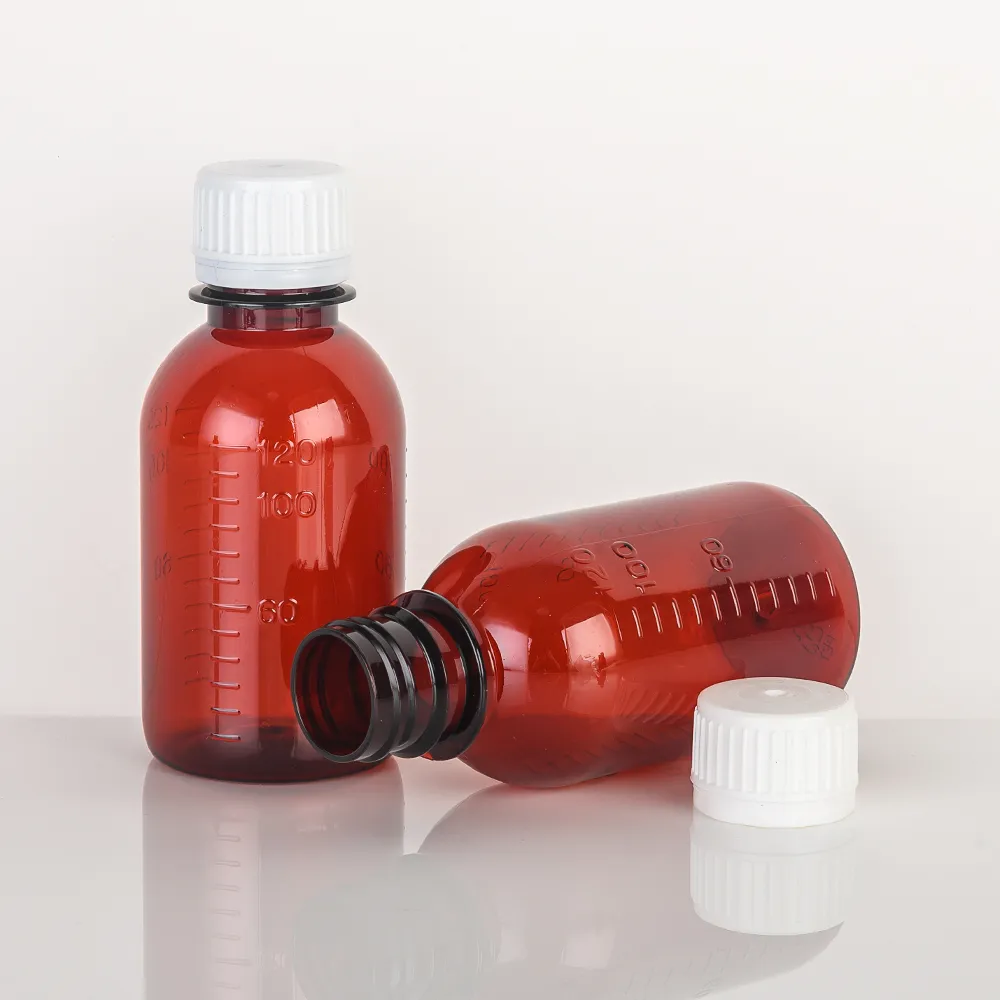
Dosage accuracy is one of the most critical yet frequently overlooked aspects of pharmaceutical packaging. When patients or caregivers pour liquid medication at home, the margin for error can be surprisingly wide — especially when the container provides no reliable measurement guidance. Graduated cough syrup bottles are specifically engineered to address this problem, embedding measurement precision directly into the packaging itself. This design choice has far-reaching implications for patient safety, treatment effectiveness, and the overall credibility of pharmaceutical brands.
The role of cough syrup bottles extends well beyond simple containment. As the primary interface between a pharmaceutical formulation and the end user, the bottle's design directly influences how accurately a patient measures and administers each dose. Graduated markings, clear material choices, appropriate volume increments, and well-calibrated scales all work together to transform an ordinary container into a precision dosing tool. Understanding how these features contribute to dosage accuracy is essential for pharmaceutical manufacturers, packaging buyers, and healthcare professionals alike.
The Relationship Between Bottle Design and Dosage Accuracy
Why Measurement Markings Matter More Than Many Assume
At first glance, the printed or molded graduation lines on cough syrup bottles may seem like a minor aesthetic detail. In practice, they serve a deeply functional purpose. When a patient needs to administer a precise volume — say, 10 mL for an adult or 5 mL for a child — the presence of clear, accurate markings on the bottle itself eliminates the need to rely entirely on auxiliary measuring cups that may not always be available or correctly used.
Research in pharmaceutical compliance consistently shows that dosage errors in liquid medications occur at higher rates than with solid tablets or capsules. The fluid nature of syrups introduces variability at every step: the pour angle, the lighting conditions, the patient's vision, and even the color of the liquid all affect how accurately someone reads a volume. Graduated cough syrup bottles that feature high-contrast, deeply embossed, or clearly printed markings significantly reduce these variables by providing an immediate visual reference right on the container.
Furthermore, standardizing measurement markings across cough syrup bottles used in a product line helps build patient familiarity. When users encounter the same scale layout each time, they develop a reliable mental model for dosing — reducing cognitive load and the likelihood of error, particularly in repeat-use scenarios such as chronic cough management or multi-day treatment courses.
Volume Increments and Their Clinical Relevance
The granularity of graduation increments is another design factor with direct clinical implications. Cough syrup bottles intended for pediatric use typically require finer increments — often 1 mL or 2.5 mL — because children's doses are weight-dependent and the therapeutic window between an effective and an excessive dose can be narrow. Adult-use cough syrup bottles may tolerate 5 mL or 10 mL increments, but finer calibration still adds a layer of confidence for users who want to be exact.
The physical length of the bottle's graduated scale also matters. A taller, narrower cough syrup bottle distributes the same volume range over a greater vertical distance, making it easier to distinguish between adjacent graduation marks. Shorter, wider bottles compress the scale, making it more difficult for users — particularly older adults or those with vision impairments — to identify precise fill lines. Packaging designers working on cough syrup bottles must balance ergonomic handling with the optical clarity needed for accurate volume reading.
Material and Transparency in Graduated Cough Syrup Bottles
How Bottle Clarity Supports Accurate Visual Measurement
Material selection is inseparable from measurement accuracy. For cough syrup bottles to function as reliable dosing references, users must be able to clearly see the liquid level inside the container. This is where material transparency plays a defining role. Light brown or amber PET bottles, for example, strike a practical balance between UV protection — which preserves the stability of light-sensitive active ingredients — and sufficient visual clarity to read the liquid level against the graduation markings.
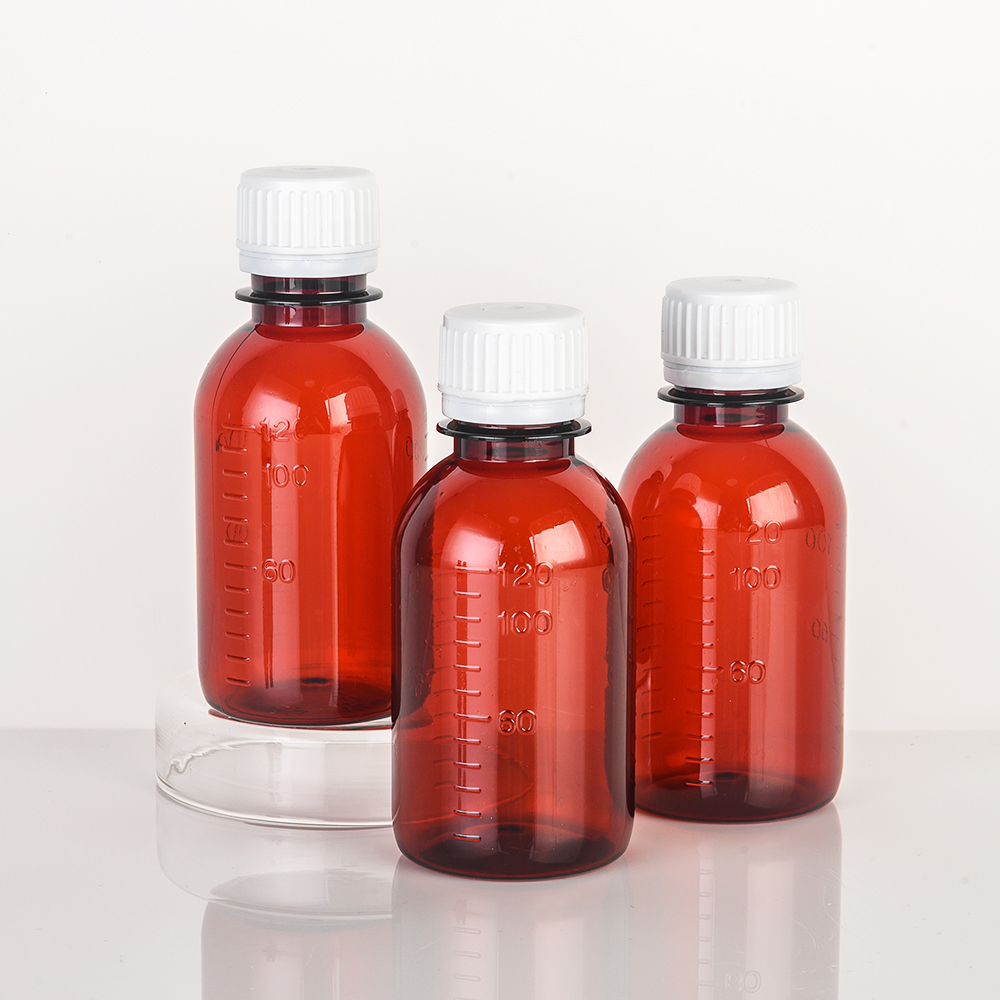
Completely opaque cough syrup bottles may protect the formulation, but they render the graduation scale useless for direct measurement. Conversely, fully transparent bottles offer excellent visibility but may not provide adequate protection for photosensitive formulations. The choice of a translucent amber or light brown PET material for cough syrup bottles is, therefore, a deliberate engineering compromise that simultaneously addresses chemical stability and measurement readability.
The surface finish of the bottle also influences readability. Matte finishes can diffuse light in ways that make it harder to identify the exact meniscus of the liquid against the graduation marks. Smoother, semi-glossy surfaces on cough syrup bottles tend to provide better visual contrast, helping users locate the liquid level with greater confidence. This seemingly minor detail can be the difference between an accurate dose and a measurement error in real-world usage conditions.
The Impact of Bottle Geometry on Measurement Consistency
Bottle geometry — including shoulder shape, body taper, and base design — affects how accurately and consistently cough syrup bottles can be read during pouring. A uniform cylindrical body allows graduation marks to correspond to equal volume increments per millimeter of height, which is the gold standard for measurement predictability. Non-uniform profiles, such as bottles that taper significantly at the shoulder, can create uneven spacing between graduation lines, introducing systematic reading errors.
When cough syrup bottles are designed with consistent wall thickness and a stable flat base, users can hold the bottle upright and at eye level to take an accurate reading before pouring. This geometry supports a reliable measurement ritual that reinforces dosage accuracy without requiring any additional tools or instructions. For pharmaceutical companies, specifying consistent geometry across their cough syrup bottle range is an investment in patient outcomes as much as it is in brand consistency.
Closure Systems and Leak-Proof Design in Dosage Management
Why Screw Cap Integrity Protects Dosage Precision
Dosage accuracy is not just about the moment of measurement — it also depends on the integrity of the product over its entire shelf life. Cough syrup bottles with reliable, leak-proof screw caps preserve the exact formulation concentration that was measured and validated during pharmaceutical development. Any evaporation or leakage from a poorly sealed bottle changes the effective concentration of the active ingredients, meaning that even a perfectly measured volume may deliver an incorrect dose.
Leak-proof closure systems on cough syrup bottles also prevent contamination and maintain the viscosity and homogeneity of the formulation. Syrups that absorb ambient moisture or lose volatile components may become more or less viscous, making them harder to pour accurately and altering the measured volume-to-dose relationship. A tight, consistently sealing screw cap is therefore an integral part of the dosage accuracy system, not merely a convenience feature.
Child-resistant closures add another dimension to this discussion. While they are mandatory for many pharmaceutical products, poorly designed child-resistant caps on cough syrup bottles can frustrate adult users and encourage improper resealing — which in turn compromises the container's integrity. Balancing child safety requirements with ease of adult use is a genuine design challenge that leading packaging engineers address through ergonomically refined closure mechanisms.
Tamper-Evidence Features and Their Role in Maintaining Dosage Trust
Tamper-evident packaging on cough syrup bottles serves a dual purpose: it protects product integrity and builds user confidence. When a patient opens a freshly sealed cough syrup bottle and the tamper-evident band is intact, they can trust that the formulation inside has not been altered, diluted, or contaminated. This trust is foundational to the correct use of the product, because a patient who suspects product tampering may adjust their self-administered dose unpredictably.
From a pharmaceutical manufacturer's perspective, integrating tamper-evident features into the graduation-marked cough syrup bottles they supply to market is a statement of quality assurance. It signals that every aspect of the packaging system — from the measurement markings to the closure to the tamper seal — has been thoughtfully designed to support accurate and safe medication use throughout the product's lifecycle.
Regulatory and Quality Standards Governing Graduated Cough Syrup Bottles
Compliance Requirements That Define Graduation Accuracy
Pharmaceutical packaging, including cough syrup bottles, is subject to regulatory scrutiny in most markets. Standards set by bodies such as the United States Pharmacopeia (USP), the European Medicines Agency (EMA), and national drug control authorities specify requirements for container materials, chemical compatibility, and closure performance. While graduation marking accuracy is often addressed in device standards rather than container standards per se, the overall regulatory framework for pharmaceutical liquid packaging creates a quality baseline that supports dosage accuracy across the supply chain.
Manufacturers of cough syrup bottles intended for pharmaceutical applications are expected to validate their marking accuracy through calibration testing. This typically involves filling the bottle to each graduation mark with a known volume of liquid and verifying that the marking corresponds to the expected volume within an acceptable tolerance. Documentation of this validation is part of the quality record that accompanies pharmaceutical-grade cough syrup bottles through the supply chain, providing pharmaceutical companies with the traceability they need for regulatory submissions.
Labeling Integration and Its Contribution to Safe Dosing
The label applied to cough syrup bottles is an extension of the dosage accuracy system. Well-designed labels reinforce the bottle's graduation markings by including clear dosing tables, age-specific dosing guidance, and illustrated instructions that show how to use the built-in scale. Labels that obscure or compete with the graduation markings — for example, by wrapping around the measurement zone — undermine the very accuracy advantage that graduated cough syrup bottles are designed to provide.
Pharmaceutical companies and packaging designers must therefore coordinate label placement carefully. Leaving the primary measurement panel of cough syrup bottles free from label material — or using transparent label sections in that area — ensures that the dosing scale remains fully visible throughout the product's use. This coordination between bottle design and label design is an often-overlooked element of dosage accuracy that becomes especially important when products are used repeatedly over a multi-day treatment period.
FAQ
What makes graduated markings on cough syrup bottles more reliable than standalone measuring cups?
Graduated cough syrup bottles integrate the measurement scale directly into the container, meaning the reference is always present and consistently calibrated to the specific bottle's geometry. Standalone measuring cups introduce additional variability — they may be from a different product, have different scale increments, or be read under inconsistent lighting and angles. When the measurement reference is part of the cough syrup bottle itself, patients encounter a single, purpose-calibrated system every time they administer a dose, which reduces the overall opportunity for measurement error.
How should pharmaceutical buyers evaluate the graduation accuracy of cough syrup bottles from a supplier?
Buyers should request calibration validation documentation that confirms each graduation mark corresponds to the labeled volume within a specified tolerance. It is also advisable to evaluate the visibility and durability of the markings — whether they are embossed into the mold, printed, or applied as a label — and to assess whether the marks remain legible after the bottle has been handled, exposed to normal light, and partially filled with a representative liquid. Cough syrup bottles that meet pharmaceutical-grade standards will typically come with material safety data and compatibility test results that support a complete evaluation.
Can the bottle material affect how accurately users read the graduation marks?
Yes, significantly. Translucent materials such as light brown or amber PET allow users to see the liquid level against the graduation marks while also providing UV protection for the formulation. Fully opaque materials make direct visual measurement impossible regardless of how accurate the graduation marks are. The surface finish, wall thickness uniformity, and color depth of cough syrup bottles all contribute to how clearly a user can identify the meniscus of the liquid and align it with the correct mark, making material selection a genuine dosage accuracy consideration.
Are there industry differences in how cough syrup bottles are graduated for pediatric versus adult use?
Pediatric cough syrup bottles typically use finer graduation increments to accommodate weight-based dosing, where small volume differences can have meaningful clinical significance. Adult formulations may use broader increments since the therapeutic range per dose is generally wider. In both cases, the graduation scale should cover the full range of possible doses specified in the product's labeling, and the increments should be fine enough that the recommended doses each fall on or very close to a marked line. Pharmaceutical developers often specify graduation requirements as part of the product's packaging development process to ensure the container supports accurate self-administration across the intended patient population.
Table of Contents
- The Relationship Between Bottle Design and Dosage Accuracy
- Material and Transparency in Graduated Cough Syrup Bottles
- Closure Systems and Leak-Proof Design in Dosage Management
- Regulatory and Quality Standards Governing Graduated Cough Syrup Bottles
-
FAQ
- What makes graduated markings on cough syrup bottles more reliable than standalone measuring cups?
- How should pharmaceutical buyers evaluate the graduation accuracy of cough syrup bottles from a supplier?
- Can the bottle material affect how accurately users read the graduation marks?
- Are there industry differences in how cough syrup bottles are graduated for pediatric versus adult use?