
 EN
EN
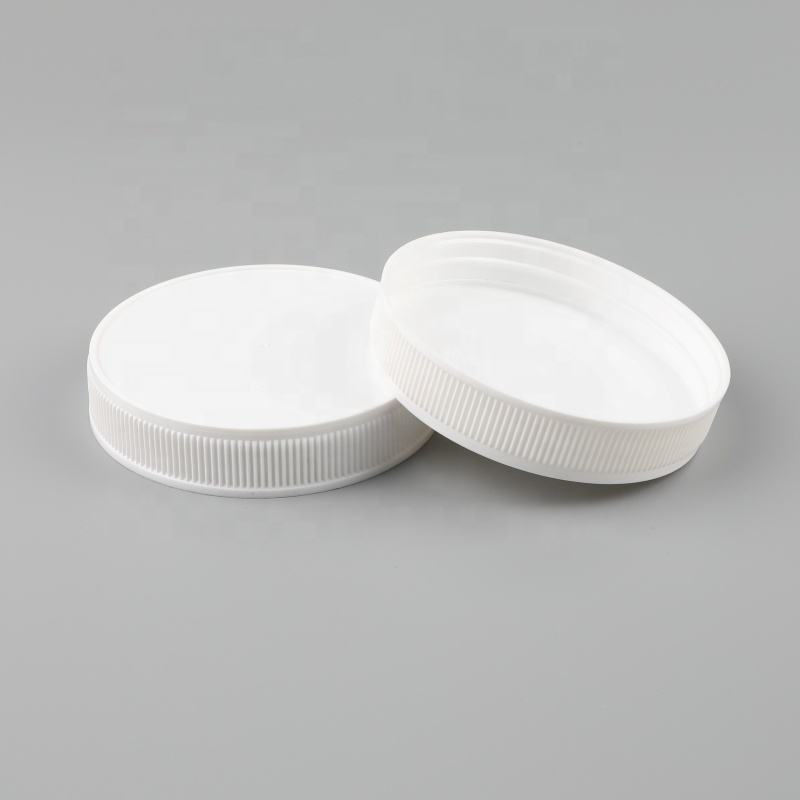
When a product reaches the end consumer, the last physical touchpoint is often the closure — and for countless pharmaceutical, chemical, and consumer goods applications, that closure is a plastic screw cap. What many procurement managers and packaging engineers overlook, however, is that not every plastic screw cap is created equal in the eyes of international regulatory bodies. Compliance is not a formality; it is a gatekeeping requirement that determines whether your product can be legally sold, safely transported, and confidently used across different markets worldwide.
Understanding whether your plastic screw cap meets international standards requires a structured review of material composition, mechanical performance, child-resistance requirements, tamper-evidence features, and regulatory documentation. This article breaks down the key compliance dimensions that define a truly standard-conforming plastic screw cap, helping you make informed decisions for your specific industry and export market needs.
Why Compliance Matters More Than You Think
The Real Cost of Non-Compliance
A plastic screw cap that fails to meet the required international standards can trigger product recalls, delayed customs clearance, financial penalties, and long-term reputational damage. In the pharmaceutical industry in particular, a non-compliant closure can be treated as a product defect, triggering serious legal liability. These consequences extend well beyond the cap itself — they reflect on your entire product line and brand integrity.
Regulatory authorities in the United States, European Union, and many Asian markets have established clear testing protocols and documentation requirements for packaging closures. If your plastic screw cap cannot be backed by relevant test reports or certifications, your product may be barred from entry into those markets entirely. This is especially critical for pharmaceutical, nutraceutical, and agrochemical exporters who operate across multiple jurisdictions simultaneously.
Even in markets where enforcement is less stringent, buyers and distributors increasingly require compliance documentation as part of their vendor qualification process. Providing a certified, compliant plastic screw cap is no longer a competitive differentiator — it is a baseline expectation that procurement teams build into their sourcing criteria.
Compliance as a Strategic Advantage
Viewing compliance purely as a legal requirement misses its strategic dimension. A rigorously compliant plastic screw cap signals manufacturing maturity, quality culture, and investment in process validation. For B2B buyers evaluating multiple suppliers, a compliant closure backed by documented testing records is a powerful indicator of long-term partnership reliability.
Furthermore, proactively achieving compliance reduces the operational risk of product reformulation or repackaging down the line. When your plastic screw cap already meets the most demanding international standards, entering new markets becomes faster, cheaper, and less administratively burdensome. It is a forward-looking investment that pays dividends across the entire product lifecycle.
Key International Standards Governing a Plastic Screw Cap
ISO Standards and Their Scope
The International Organization for Standardization (ISO) has published several standards directly relevant to closure performance. ISO 8317, for example, addresses child-resistant packaging — a standard that any plastic screw cap used in pharmaceutical or hazardous household product applications must meet. This standard specifies testing protocols involving child panels and adult panels to verify that the closure is both accessible to adults and resistant to children under a specific age threshold.

ISO standards also cover dimensional tolerances and thread compatibility, ensuring that a plastic screw cap engages properly with its corresponding container finish. Dimensional conformity is essential not only for mechanical integrity but also for sealing performance, which directly affects product shelf life and contamination prevention. Deviations from standardized thread dimensions can result in leakage failures, compromised seal integrity, and ultimately, unsafe product delivery.
It is important to note that ISO standards are voluntary by nature, but they are widely adopted as the baseline for national standards and buyer specifications. When your plastic screw cap is manufactured and tested against ISO benchmarks, it becomes far more universally accepted across geographies and product categories.
US CFR and FDA Packaging Requirements
In the United States, the Code of Federal Regulations (CFR) Title 16, Part 1700 governs child-resistant packaging requirements under the Poison Prevention Packaging Act (PPPA). Any plastic screw cap used on prescription drugs, controlled substances, or specific household chemicals must comply with these regulations before the product can be legally marketed in the US market.
The FDA also exercises oversight over pharmaceutical packaging through Good Manufacturing Practice (GMP) guidelines, which require that packaging components — including every plastic screw cap — be manufactured under controlled conditions with documented quality control procedures. This means material certificates, process records, and test reports are not optional for pharma-grade closures destined for the US market.
Compliance with US regulations is particularly demanding because it requires both product testing and process documentation. A supplier that can provide a fully compliant plastic screw cap with PPPA-level certification and FDA-compatible documentation represents a significantly lower sourcing risk for US-market pharmaceutical distributors and contract manufacturers.
European EN Standards and the Role of the CLP Regulation
In the European Union, EN 28317 (equivalent to ISO 8317) governs child-resistant packaging for dangerous substances. The EU's CLP Regulation (Classification, Labelling and Packaging of Substances and Mixtures) further mandates child-resistant closures for products classified as hazardous. For any company exporting products into the EU with a plastic screw cap closure, alignment with EN standards is non-negotiable.
European pharmaceutical regulations also require packaging to comply with European Pharmacopoeia (Ph. Eur.) standards, which include requirements on material purity, extractables and leachables, and compatibility between the closure and the product it contains. A plastic screw cap used in pharma applications must therefore not only be mechanically sound but also chemically inert and compatible with the drug formulation it seals.
Material Compliance: What Your Plastic Screw Cap Is Made Of
Polypropylene and Food-Grade Certification
The most common material used in a pharmaceutical-grade plastic screw cap is polypropylene (PP). PP offers excellent chemical resistance, thermal stability, and moisture barrier properties, making it suitable for a wide range of applications. However, not all PP grades are created equal in terms of compliance. Food-contact and pharmaceutical-grade PP must meet specific standards such as EU Regulation 10/2011 on plastic materials intended to contact food, or FDA 21 CFR for materials in contact with drugs or food products.
Material compliance requires that the plastic screw cap manufacturer use only approved additives, colorants, and processing aids that do not migrate into the product at harmful levels. Compliance documentation should include material declarations, food-contact certificates, and ideally, independent laboratory analysis of migration levels. Without this documentation, buyers in regulated industries cannot confidently validate the safety of the closure in contact with their product.
When evaluating a plastic screw cap supplier, requesting a full Material Safety Data Sheet (MSDS) and a Declaration of Compliance (DoC) for the raw materials used is a standard procurement practice. These documents provide the traceability and chemical transparency that regulatory audits require.
Avoiding Restricted Substances
International regulations increasingly restrict or ban certain substances in packaging materials. The EU's REACH regulation controls substances of very high concern (SVHCs), and RoHS directives restrict specific hazardous substances in certain product categories. A compliant plastic screw cap must be free from substances listed under these frameworks, and suppliers should be able to provide REACH compliance declarations on request.
BPA (Bisphenol A) and certain phthalates, once commonly used in plastic manufacturing, are now heavily regulated or banned in many markets. While PP-based plastic screw cap products are generally free from BPA by nature of their chemistry, it is still best practice to obtain formal declarations confirming the absence of regulated substances, particularly when selling into European or North American markets where regulatory scrutiny is highest.
Child-Resistance and Tamper-Evidence Requirements
Understanding Child-Resistant Closure Testing
A child-resistant plastic screw cap, often referred to as a CRC (child-resistant closure), must pass standardized testing protocols that verify its resistance to opening by children aged 42–51 months while remaining accessible to adults. The testing methodology defined in ISO 8317 and ASTM D3475 involves exposing the closure to test panels and measuring opening success rates under defined conditions.
The most common mechanism in a CRC plastic screw cap is the push-and-turn or squeeze-and-turn design, which requires a two-step action that young children typically lack the coordination to execute. This physical design must be validated through testing — simply claiming child resistance without certified test data is insufficient for regulatory compliance and liability protection.
Pharmaceutical manufacturers and contract packagers should require third-party CRC test reports from their plastic screw cap supplier before incorporating the closure into a commercial product line. These reports should reference the applicable standard, test panel demographics, and pass/fail results in full compliance with the method described in the relevant regulation.
Tamper Evidence as a Compliance and Trust Element
Tamper-evident features are mandated by various national and international regulations for OTC pharmaceutical products, dietary supplements, and some food applications. A plastic screw cap with an integrated tamper-evident band provides visible evidence of first opening, protecting both the consumer and the brand from tampering-related liability claims.
Under FDA 21 CFR Part 211.132, tamper-resistant packaging is required for OTC human drug products in the United States. The regulation specifies that the packaging must have an indicator or barrier to entry which, if breached or missing, provides visible evidence to consumers. A plastic screw cap with a properly designed tamper-evident band directly meets this requirement when the band separates cleanly and irreversibly upon first opening.
The design quality of the tamper-evident band in a plastic screw cap is critical. Bands that detach too easily during handling — before the product is even opened — create false tamper signals and can cause customer confusion or product returns. The band should be calibrated to remain intact through the distribution chain yet detach cleanly at the point of consumer opening.
How to Audit Your Plastic Screw Cap for Compliance Readiness
Documentation Checklist for Compliance Audits
Auditing the compliance status of your plastic screw cap begins with a thorough documentation review. The key documents to request from your supplier include: a Declaration of Compliance for food or pharmaceutical contact, material certificates specifying the PP resin grade used, CRC test reports referencing ISO 8317 or ASTM D3475, REACH and RoHS declarations, and any relevant FDA or CE correspondence. Together, these documents form the compliance dossier that regulatory authorities or institutional buyers may request.
In addition to documentation, a physical audit of your plastic screw cap should include dimensional verification against the applicable ISO or ASTM thread standard, seal integrity testing under simulated distribution conditions, and compatibility testing with the intended container. These physical checks confirm that the closure performs as documented and that the documentation reflects actual product performance.
Many B2B buyers are now incorporating supplier qualification programs that include annual compliance audits, which means the compliance status of your plastic screw cap must be maintained continuously — not just verified at initial qualification. Supplier relationships built on transparent documentation exchange and periodic re-testing are far more resilient when regulatory environments change.
When to Seek Third-Party Verification
While supplier-provided documentation is a starting point, third-party laboratory verification adds a critical layer of independence to your compliance assessment. Independent testing of your plastic screw cap against the relevant standards removes any potential bias in supplier self-certification and provides legally defensible evidence of compliance for use in regulatory submissions or litigation defense.
Third-party testing is especially recommended when entering a new export market, launching a new product category, or switching to a new plastic screw cap supplier. The cost of independent testing is minimal compared to the financial and reputational exposure of a non-compliant product reaching the market. For pharmaceutical applications, many regulatory agencies explicitly require independent testing as part of the product registration dossier.
FAQ
What international standards apply to a plastic screw cap used in pharmaceutical packaging?
The most commonly referenced standards for a pharmaceutical-grade plastic screw cap include ISO 8317 for child-resistant packaging, ASTM D3475 for the US market, EU Regulation 10/2011 for food and drug contact materials, and FDA 21 CFR Part 211.132 for tamper-resistant packaging. Compliance with European Pharmacopoeia requirements may also be necessary for drug product packaging in the EU.
How do I know if my plastic screw cap is truly child-resistant?
A genuinely child-resistant plastic screw cap must have been tested according to ISO 8317 or an equivalent national standard using approved test panels of children and adults. The supplier should be able to provide a formal test report from an accredited laboratory. Self-declared child resistance without a third-party test report is not considered sufficient for regulatory or liability purposes in most markets.
Does the material used in a plastic screw cap affect regulatory compliance?
Yes, significantly. The resin grade, colorants, and processing additives used in a plastic screw cap all affect whether it meets food-contact or pharmaceutical-contact material standards. Polypropylene-based closures used in regulated applications must comply with EU 10/2011 or FDA 21 CFR material requirements, and suppliers should provide a Declaration of Compliance and full material traceability as supporting documentation.
Can a plastic screw cap be both child-resistant and tamper-evident?
Yes. Many pharmaceutical-grade closures are designed to combine both functions in a single plastic screw cap. A push-and-turn or squeeze-and-turn mechanism provides child-resistant functionality, while an integrated tear band or break-away skirt provides tamper evidence. These dual-function designs must be validated individually for each feature under the applicable testing standard to be considered fully compliant in both dimensions.