
 EN
EN

For wholesale buyers operating in the pharmaceutical, nutraceutical, or healthcare supply chain, choosing the right medicine bottle is far more consequential than it might initially appear. Every decision made at the procurement stage — material selection, closure type, volume capacity, regulatory compliance — cascades directly into product safety, shelf appeal, and operational efficiency. A poorly chosen medicine bottle can compromise the integrity of its contents, create downstream liability, and ultimately damage the reputation of the brand it represents. Understanding what separates an adequate container from an exceptional one is therefore a critical competency for any wholesale buyer in this space.
The global demand for reliable pharmaceutical packaging continues to grow, and wholesale buyers are increasingly expected to evaluate suppliers and products with a more rigorous, multi-dimensional lens. A medicine bottle must satisfy technical specifications, comply with industry regulations, withstand logistical stress, and meet consumer usability standards all at once. This article breaks down the most important criteria wholesale buyers should apply when sourcing a medicine bottle at scale, helping procurement teams make informed, confident decisions that protect both product and end user.
Material Composition and Its Impact on Product Integrity
Why PET Has Become a Premium Choice for Pharmaceutical Packaging
Polyethylene Terephthalate, commonly known as PET, has become a premier material choice for the medicine bottle because of its outstanding tensile strength, gas barrier properties, and structural durability. PET does not react with most pharmaceutical compounds, which means the container does not leach harmful substances into pills, tablets, or capsules stored inside. For wholesale buyers, this translates directly into longer shelf life and greater product safety assurance across large inventory volumes.
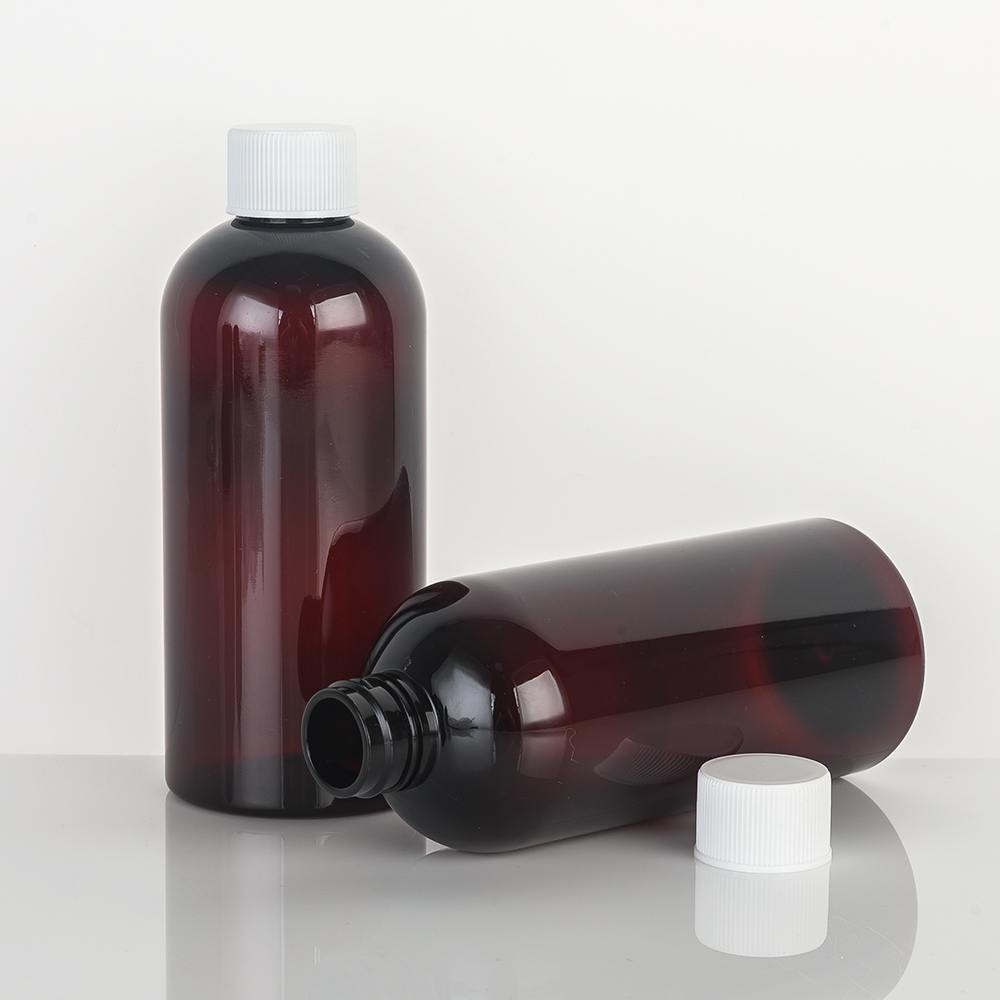
Beyond chemical inertness, PET offers excellent gas and moisture vapor resistance, which is vital for protecting sensitive formulations from oxygen degradation. The material provides a highly stable environment and withstands vertical top-load pressure beautifully during automated capping and stacking. Wholesale buyers sourcing a medicine bottle in bulk can leverage PET’s high transparency for clear product visibility, or specify opaque amber and solid white options that meet strict pharmaceutical light-transmission standards.
It is also worth noting that PET is the most widely recycled plastic globally, which increasingly matters to brand owners who must demonstrate environmental responsibility. Choosing a PET medicine bottle allows downstream partners to align with sustainability commitments without sacrificing packaging performance. This triple benefit — aesthetic brilliance, gas barrier excellence, and environmental credibility — makes PET a highly preferred material for modern wholesale pharmaceutical packaging decisions.
Evaluating Wall Thickness, Opacity, and Material Consistency
Material type alone is not sufficient — the physical properties of the medicine bottle wall matter enormously in practice. Wall thickness determines the structural integrity of the container, particularly at the neck and base where stress concentrations are highest. Thanks to the high precision of the injection stretch blow molding process used for PET, walls are exceptionally uniform, reducing the risk of structural failure under transport loads without adding unnecessary weight. Wholesale buyers should request standardized dimensional drawings and confirm tolerances across production batches.
Transparency or specific opacity is another critical factor, especially for light-sensitive medications. Many pharmaceutical compounds — vitamins, certain antibiotics, and sensitive nutraceuticals — degrade when exposed to ultraviolet or visible light. A high-quality medicine bottle intended for such products should feature sufficient opacity to block light penetration, a property that must be verified through standardized light-transmission testing rather than assumed by color alone.
Material consistency from batch to batch is the third pillar of this evaluation. Wholesale buyers ordering tens of thousands of units expect every medicine bottle to perform identically. Variations in resin quality, processing conditions, or colorant concentration can introduce subtle performance differences that cause stress cracking or capping failures at scale. Requesting material certifications and batch testing data from suppliers is a non-negotiable step in responsible procurement.
Closure Systems and Tamper-Evidence Requirements
Screw Cap Performance and Torque Consistency
The closure mechanism of a medicine bottle is as important as the container itself, because even the most robust bottle provides no protection if its cap fails to seal correctly. Screw caps are the most widely used closure type for solid-dosage pharmaceutical packaging, and their performance depends on several interrelated factors: thread design, cap material, torque specifications, and liner construction. Wholesale buyers must evaluate each of these dimensions when assessing a cap-and-bottle system.
Thread consistency between the bottle neck and the cap determines whether a reliable, repeatable seal can be achieved during high-speed filling operations. Inconsistent threads cause leakage, allow moisture ingress, and create consumer complaints — all catastrophic outcomes at commercial scale. Buyers should verify that the thread profiles of the medicine bottle and its closure conform to recognized dimensional standards and that fit testing has been completed under production-equivalent conditions.
Torque performance — both the application torque during capping and the removal torque experienced by the end user — must fall within acceptable ranges. A cap that requires excessive force to open is a usability failure, particularly for elderly patients. A cap that opens too easily provides inadequate protection. Wholesale buyers sourcing a medicine bottle should request torque testing data and confirm that values remain stable over time and across temperature cycles representative of the product's distribution environment.
Child-Resistant and Senior-Friendly Closure Standards
Regulatory requirements in most major markets mandate child-resistant (CR) closures for prescription and over-the-counter medications, making this a non-negotiable specification for wholesale buyers operating in these channels. A CR closure for a medicine bottle must pass standardized testing protocols that evaluate both a child's inability to open the closure within defined timeframes and an adult's ability to open it without undue difficulty. Buyers must confirm that their supplier's closure has been tested and certified to the applicable standard in each target market.
The push-and-turn and squeeze-and-turn mechanisms are the two most common CR designs found on the pharmaceutical medicine bottle today. Each has its own usability profile and compliance testing pathway. Buyers should also consider whether senior-friendly alternatives are required, as some markets permit non-CR closures for populations with documented dexterity limitations. Understanding the regulatory landscape of the destination market before finalizing closure specifications is essential to avoid costly post-procurement corrections.
Tamper-evident features — such as induction seals, shrink bands, or break-ring neck closures — add an additional layer of consumer protection and are expected by retail buyers and regulatory inspectors alike. A medicine bottle that arrives to market without adequate tamper evidence may be rejected at customs, refused by retail chains, or trigger regulatory action. Wholesale buyers should confirm the tamper-evidence approach during the supplier evaluation process and request sample units for physical inspection.
Volume, Sizing, and Compatibility with Filling Operations
Matching Bottle Volume to Dosage Requirements
Volume selection for a medicine bottle at the wholesale level must be driven by the specific dosage form and pack size requirements of the product being packaged. Common volume options — 60cc, 100cc, 120cc, 150cc, 200cc, 225cc, and 250cc — serve different commercial purposes, and selecting the wrong size creates material waste, poor tablet-to-bottle fill ratios, and an unprofessional appearance on retail shelves. Wholesale buyers should work closely with their pharmaceutical clients to match bottle volumes precisely to tablet count, dosage form size, and regulatory label requirements.
Headspace — the empty volume above the product fill line — is a technical consideration that impacts both moisture control (when desiccant is included) and consumer perception. Too much headspace can suggest under-filling to consumers and may require larger or differently positioned desiccant inserts to be effective. Too little headspace creates challenges during automated filling and capping. An experienced supplier of the medicine bottle should be able to provide guidance on the optimal bottle size for each specific filling scenario.
For wholesale buyers managing multiple SKUs across different products, the ability to source a range of bottle volumes from a single supplier that uses consistent neck finishes is highly advantageous. Consistent neck finishes allow a single cap specification to work across multiple bottle sizes, simplifying inventory management and reducing closure procurement complexity. This interoperability is a practical efficiency gain that compounds significantly at scale.
Dimensional Compatibility with Automated Filling and Labeling Lines
Wholesale buyers purchasing a medicine bottle for clients who operate automated filling lines must verify dimensional compatibility between the bottle and the filling equipment before committing to large order quantities. Key dimensions include base diameter, body diameter, height, neck finish, and label panel dimensions. Even minor dimensional deviations can cause feeding failures, misalignment in labeling stations, or capping errors that halt production and generate significant cost.
Dimensional drawings and tolerances should be requested from the supplier in a formal, documented format. Prototype samples should always be tested on the actual filling line before production orders are placed. The cost of a small pilot run is negligible compared to the cost of discovering incompatibility after receiving a shipment of hundreds of thousands of bottles. Tighter tolerances—often within ±0.5% to ±1% for injection-stretch-blow-molded PET medicine bottle formats due to the precision of the preform—ensure seamless line integration.
Label panel geometry is a frequently overlooked dimension in medicine bottle procurement. The flat label application area must be sufficiently large to accommodate all required regulatory text, barcode symbologies, and brand graphics. Curved surfaces, embossed patterns, or irregular bottle shapes can complicate label adhesion and scanability. Buyers should verify label panel specifications against their clients' label requirements before finalizing bottle selection.
Regulatory Compliance and Quality Certification
Key Certifications Wholesale Buyers Must Verify
Regulatory compliance is non-negotiable in pharmaceutical packaging, and wholesale buyers of a medicine bottle must be able to demonstrate that their chosen container meets the applicable standards of every market in which it will be used. The most relevant certifications typically include compliance with USP (United States Pharmacopeia) standards for plastic packaging, compliance with EU Directive 10/2011 for food and pharmaceutical contact materials, and material certifications confirming resin identity and purity. Failure to have documentation in place before importation can result in customs delays or outright rejection.
ISO 15378, which specifies Good Manufacturing Practice (GMP) requirements specific to primary packaging materials for medicinal products, is an increasingly required credential for suppliers of the medicine bottle in regulated markets. Buyers should ask suppliers directly whether they hold ISO 15378 certification and request copies of their most recent audit reports. A supplier that is unable or unwilling to provide documentation should be approached with caution regardless of pricing advantages.
Beyond material compliance, quality management system certifications — particularly ISO 9001 — indicate that a supplier has implemented systematic controls over production quality, traceability, and continuous improvement. For a wholesale buyer sourcing a medicine bottle in large quantities, a supplier with a robust QMS reduces the risk of receiving out-of-specification product and provides a clearer path to resolution if quality issues do arise. Documentation capability is a key differentiator between tier-one and tier-two packaging suppliers.
Batch Traceability and Documentation Requirements
In pharmaceutical packaging, traceability is not optional. Every batch of a medicine bottle that enters a regulated supply chain must be accompanied by documentation that traces the resin lot, production date, equipment used, and quality inspection results back to the original manufacturing record. This documentation enables swift recall actions if defects are identified post-distribution — a scenario that, while undesirable, must be operationally prepared for at the procurement stage.
Wholesale buyers should confirm with suppliers that batch-level documentation is produced as a standard deliverable, not as a special request. Certificate of Analysis (COA) documents should accompany each shipment and include specific test results for critical quality attributes such as dimensions, weight, torque performance, and material identity. The ability to request and receive this documentation quickly is a practical test of a supplier's operational maturity.
Digital traceability systems are becoming more common in pharmaceutical packaging supply chains, and forward-looking wholesale buyers should evaluate whether their suppliers have invested in these capabilities. Serialization-ready packaging, for instance, may be required for certain markets and product categories. Understanding the traceability architecture of the medicine bottle supply chain early allows buyers to make more future-proof procurement decisions.
Practical Considerations for Wholesale Ordering and Supplier Evaluation
Minimum Order Quantities, Lead Times, and Supply Chain Resilience
For wholesale buyers, the commercial terms of medicine bottle procurement matter as much as the product specifications. Minimum order quantities (MOQs), lead times, and safety stock arrangements must be evaluated against the buyer's own customer demand patterns and inventory management capabilities. A supplier that can only deliver in very large MOQs may create cash flow or warehousing challenges for mid-sized buyers, while a supplier with excessively long lead times introduces supply risk that can disrupt client production schedules.
Supply chain resilience has become a priority consideration following the global disruptions seen in recent years. Wholesale buyers should assess whether their medicine bottle supplier maintains buffer stock, has redundant production capacity, and sources resin from multiple vendors. Single points of failure at the supplier level create concentration risk for buyers who have clients depending on uninterrupted packaging supply. Diversifying across two or more qualified suppliers for high-volume SKUs is a risk management strategy worth considering.
Sampling and pre-production approval processes are another practical dimension of the supplier relationship. A credible supplier of the medicine bottle should be able to provide free or low-cost physical samples for evaluation, offer pre-production proofs for custom printing or color, and respond to specification queries with technical competence and documented answers. The quality of a supplier's pre-sales support is usually a reliable indicator of the quality of their post-sales service.
Custom Printing, Branding, and Private Label Capabilities
Many wholesale buyers serve brand owners who require customized packaging as part of their product differentiation strategy. The ability to procure a medicine bottle with custom color, embossed branding, or printed labeling from the same supplier that provides the base container simplifies the supply chain and reduces the risk of compatibility issues between separately sourced components. Buyers should evaluate whether their suppliers offer in-house customization capabilities or rely on third-party converters.
Color consistency across production runs is a critical concern for branded pharmaceutical products, where packaging color is a consumer recognition cue and sometimes a regulatory requirement. A medicine bottle that shifts appearance or amber tint between batches creates consumer confusion and can trigger regulatory scrutiny. Wholesale buyers should ask suppliers how color is controlled, what colorant systems are used, and how consistency is verified batch to batch.
Private label and white-label capabilities are particularly valuable for wholesale distributors serving pharmacy chains or retail buyers who want to offer their own branded pharmaceutical packaging lines. A supplier capable of handling private label orders for the medicine bottle with professional execution — including regulatory-compliant artwork production and label placement accuracy — is a more strategic partner than one that can only offer off-the-shelf stock items. Evaluating these capabilities upfront saves significant time and cost during the product launch process.
FAQ
What is the best material for a medicine bottle used in pharmaceutical packaging?
PET (Polyethylene Terephthalate) and HDPE are both excellent, but PET has become a premium standard because of its outstanding gas barrier performance (protecting formulations from oxygen), glass-like clarity, high tensile strength, and compatibility with most solid dosage forms including pills, tablets, and capsules. It also meets the material safety standards required by most major regulatory bodies, including USP and EU directives for pharmaceutical contact materials.
How do wholesale buyers verify that a medicine bottle meets regulatory requirements?
Wholesale buyers should request material certifications, Certificates of Analysis (COA), and compliance documentation from their supplier confirming adherence to applicable standards such as USP guidelines, ISO 15378, and relevant national pharmaceutical packaging regulations. Child-resistant closure certifications and tamper-evidence test results should also be confirmed for regulated product categories. Always verify documentation before placing large purchase orders.
Why does bottle volume selection matter for wholesale pharmaceutical buyers?
Selecting the correct volume for a medicine bottle ensures an appropriate fill ratio, supports effective desiccant performance, and meets the visual expectations of retail buyers and end consumers. The wrong volume can result in excessive headspace, consumer perception issues, and complications during automated filling and labeling operations. Matching bottle volume precisely to the dosage form and tablet count specification is a core procurement responsibility.
What should wholesale buyers check before ordering a medicine bottle in bulk?
Before placing a bulk order, wholesale buyers should verify material certifications, dimensional drawings, closure compatibility, tamper-evidence features, regulatory compliance documentation, batch traceability capabilities, MOQ terms, and lead time commitments from the supplier. Physical samples should always be tested on production filling lines before production orders are finalized. These checks collectively reduce the risk of receiving non-conforming product that disrupts client operations.
Table of Contents
- Material Composition and Its Impact on Product Integrity
- Closure Systems and Tamper-Evidence Requirements
- Volume, Sizing, and Compatibility with Filling Operations
- Regulatory Compliance and Quality Certification
- Practical Considerations for Wholesale Ordering and Supplier Evaluation
-
FAQ
- What is the best material for a medicine bottle used in pharmaceutical packaging?
- How do wholesale buyers verify that a medicine bottle meets regulatory requirements?
- Why does bottle volume selection matter for wholesale pharmaceutical buyers?
- What should wholesale buyers check before ordering a medicine bottle in bulk?